My Nile
2 min
The Nile Access Service comes with an integrated self-service mechanism for end users. End users get information about network outages and application-related issues without contacting the IT Help Desk.
Users connected to the Nile Access Service can access my.nilesecure.com from their browsers to interact with the network.
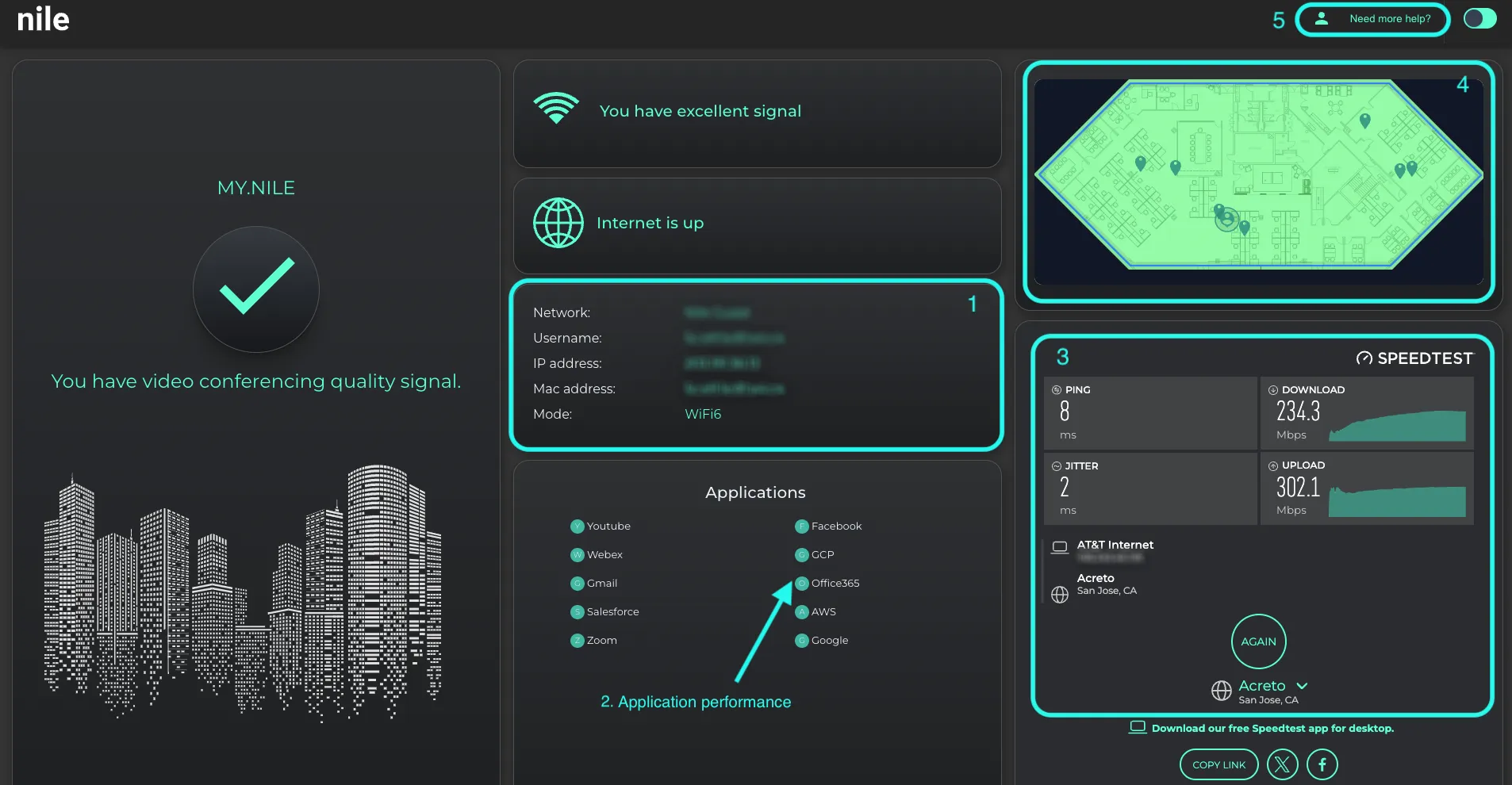
My Nile
My Nile provides users with information on
- Information of the device such as:
- MAC address
- IP address
- Username
- Network the device is connected to
- Mode of the connection (Wi-Fi 6, 6E, etc)
- How the top 10 applications are performing in the network.
- You can click on the individual applications and find the performance metrics and the availability of the application.
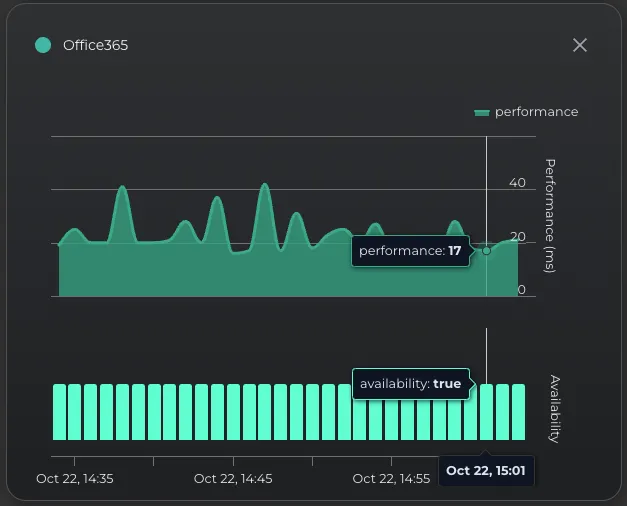
Application Monitoring
- Users can run a Speed Test from their local system to the internet.
- Location:
- My Nile displays the location of the user on the floor plan.
- Note: The dropped pins visible on the image at the top of the page are the locations of other devices connected to the same network (SSID) as the user's device.
- You can enable or disable the location of the other devices by toggling a button on the Nile Portal.
- Navigate to Global Settings >> My Nile.
- Self Service Tools:
- Self Registration
- Users can onboard new devices and generate unique keys to join the network.
- For more information on how to self-register, visit this page
- Create a ticket with the Helpdesk
- Clicking the need more help button opens a pop-up screen, where you can fill in personal information such as your email address, and the tool presents an option to take a screenshot of the page so that it is attached to the ticket to help the IT team with your request.
- If this option is not present, your admin might not have integrated any ITSM tools. Navigate to Global Settings >> Integrations and set up an ITSM tool to be used for My Nile.
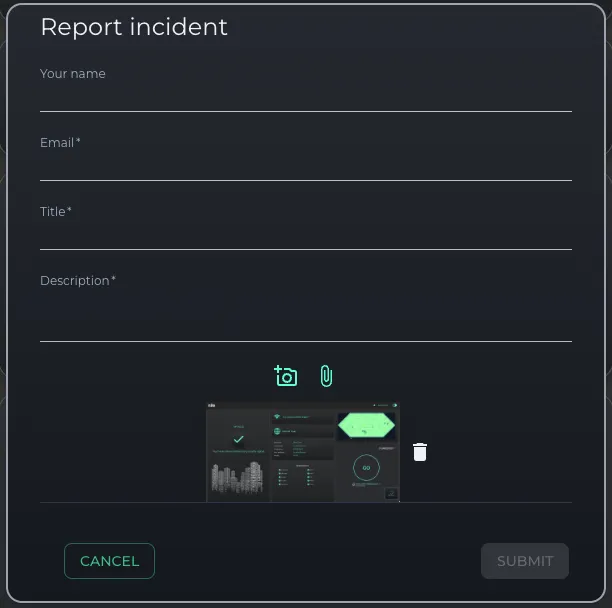
Create a Ticket with the help desk